



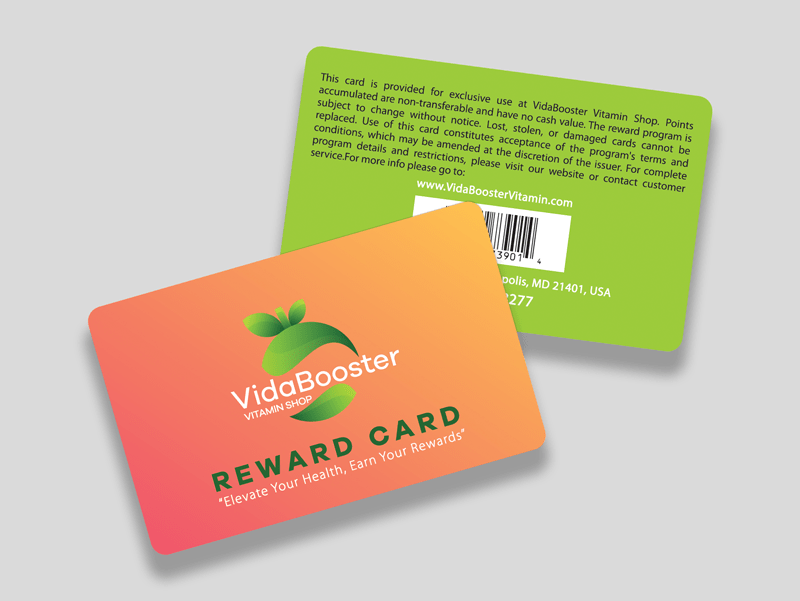
Getting a customer through the door the first time is the easy part. Getting them to return, and to keep returning, is where most businesses lose ground. Loyalty cards for business give customers a visible reason to come back: purchases earn progress toward a reward they actually want. Programs that reward points, visits, or spending create a feedback loop that turns single buyers into regulars and occasional customers into loyal ones.
1. Creating a Clear Reason to Come Back
The most effective programs use rules customers can repeat without looking them up:
- Buy 9 coffees and receive the 10th free
- Earn one point for every dollar spent
- Receive a discount after five visits
- Unlock member pricing after reaching a spending level
Complicated restrictions make rewards feel unreachable. When the rules take more than one sentence to explain, customers stop trying. The reward should also match what the customer already buys. Offering a reward on a product nobody orders does nothing for retention.
2. Increasing Visit Frequency
Visit-based rewards encourage customers to return regularly rather than only when they happen to need something. Offering a bonus for a second visit within a short window, double points during slow periods, or a recurring monthly reward all push visit frequency up without permanently discounting every transaction.
Matching the Reward Schedule to the Purchase Cycle
Salon customers typically visit every four to six weeks. Café customers might visit three times a week. The reward schedule needs to match their natural visit frequency. A stamp-based program that rewards customers after ten visits works well for a café. The same structure applied to a quarterly service business rarely generates the same frequency.
3. Encouraging Higher Spending Per Visit
Bonus points at a spending threshold, bundled offers, and tiered rewards all encourage customers to add one more item to reach the next benefit. This increases average order value without requiring a discount on each transaction.
The reward should be structured to avoid pushing customers beyond what they consider worthwhile to spend. Programs that feel like they are pressuring rather than rewarding generate resentment rather than loyalty. Tracking average order value after a loyalty card launches reveals if the structure is working.
4. Building Retention and Reducing Switching
Accumulated points and progress give customers a reason to return to the same business rather than try a competitor. The further a customer progresses through a program, the more they have at stake by leaving. That progression makes loyalty programs a retention tool rather than a discount mechanism.
Common program mistakes that damage retention:
- Rewards expiring without warning
- Rules designed to make redemption difficult
- Benefits that only apply to high-spend customers
- Long delays before the first reward arrives
The goal is to make the relationship feel genuinely rewarding, rather than building a system that technically offers benefits while making them difficult to reach.
5. Making Customers Feel Recognized
Using the card to identify returning customers at checkout creates a moment of visible acknowledgment. Saved preferences, membership levels, and birthday or anniversary offers all signal that the business sees the customer as an individual rather than a transaction.
Members who are acknowledged naturally at checkout feel the program working even before their first reward arrives. Collecting customer data without providing visible value in return makes a program feel invasive rather than generous.
6. Personalizing Offers and Rewards
Purchase data and visit history reveal what individual customers actually want. Relevant offers can be based on:
- Product category and purchase history
- Visit frequency and last visit date
- Spending level and basket size
- Inactive periods that suggest the customer is at risk of leaving
Businesses that use this data retain customers more effectively than those sending the same promotion to everyone.
Different incentives serve different customer groups. New members benefit from a fast first reward. Active members respond to bonus opportunities. VIP customers respond to exclusive access. At-risk customers respond to a reactivation offer with a time limit
7. Making Enrollment and Redemption Easy
Sign-up should take under two minutes. Providing the card immediately, explaining the first reward clearly, and training staff to describe the program in one or two sentences all increase uptake. Redemption needs to be as smooth. Customers should be able to scan, tap, or swipe the card quickly and see their balance without asking. Complicated redemption steps and unexpected expiration rules reduce repeat use and undermine the program’s purpose.
8. Combining Physical Cards With Digital Access
Plastic cards and key tags handle in-person identification at checkout. Adding a QR code that links to account details, reward balances, digital coupons, or online ordering extends the program beyond the physical transaction. Keeping benefits consistent across in-store and online channels prevents the frustration that comes from earning points in one place and finding them inaccessible in another.
9. Promoting the Loyalty Card Program
The program should be visible at every customer touchpoint: checkout counter, receipts, email, SMS, social media, and packaging. Explaining the immediate benefit, rather than only describing long-term rewards, increases enrollment at the point of sale.
Welcome rewards that activate the first repeat visit are more effective than a distant promise of eventual discounts. Reminders about unused points or rewards approaching expiry bring inactive members back and keep the program working between visits.
10. Re-Engaging Inactive Customers
Customers who have missed their typical purchase cycle are worth a targeted effort before they are written off. Identifying these members through the card system and sending a relevant, limited-time incentive pulls some back without committing to a permanent discount.
The card system makes it possible to distinguish genuinely inactive customers from those whose normal buying cycle is simply longer than average, so outreach stays relevant rather than irritating.
Choosing Rewards That Protect Profitability
Rewards carry a cost, and calculating that cost against the incremental revenue from repeat visits shows if the program is generating margin or eroding it. Non-price benefits protect margins while still giving customers a reason to return:
- Priority service or faster queue access
- Free upgrades on existing products or services
- Exclusive early access to new releases
- Priority booking for busy periods
Testing the program with a small group before launching it widely reveals if the earning threshold feels achievable and if the reward drives the repeat behavior the business needs.
Measuring Results
Key metrics to track:
- Enrollment rate and active member rate
- Repeat purchase rate and second purchase conversion
- Visit frequency and average order value
- Reward redemption rate and inactive member reactivation
- Customer lifetime value and program cost versus incremental revenue
That data drives improvements to reward timing, offer relevance, enrollment messaging, and communication frequency. Businesses that track second purchase conversion specifically, rather than total sign-ups, get the clearest picture of whether the program is changing customer behavior.
Types of Loyalty Rewards That Work
The reward structure shapes how customers engage with the program. Choosing one that fits the business model and customers’ buying habits can mean the difference between a program people use and one they ignore.
1. Points-Based Rewards
A points system gives customers credits that can build toward different rewards. These programs work across retail, restaurants, online stores, and service businesses and allow multiple reward levels.
2. Visit-Based Rewards
For businesses that rely on repeat visits, stamps or credits can reward customers after each visit. This format suits cafés, salons, gyms, and service providers. The rules are simple to explain and easy to promote at checkout.
3. Spend-Based Rewards
Purchase value determines the reward in a spend-based program, making it useful for businesses with varied order sizes. Customers can earn greater benefits as their spending increases, which can also encourage larger transactions.
4. Tiered Rewards
A tiered program gives customers access to better benefits as they reach higher spending or visit milestones. This structure creates a sense of progression and status, making it useful for businesses with frequent or high-value customers.
5. Non-Discount Rewards
Early access, free upgrades, priority booking, and exclusive events give customers a reason to return without eroding profit margins through repeated discounting.
What Happens to Revenue Without a Loyalty Program
A first-time buyer who never returns generates one transaction. The cost of bringing that customer in gets recovered once and produces nothing further. Businesses running entirely on new customer traffic spend continuously on acquisition while earning nothing from the relationship after the first sale.
Why the Second Purchase Is the Turning Point
The second purchase is the one that matters most. A customer who visits twice is significantly more likely to visit a third time than a first-time visitor is to return at all. Without a mechanism to drive that second visit, most businesses lose customers at the point where they were closest to becoming regulars.
The gaps that open up without a loyalty program:
- Repeat customers and one-time buyers look identical in the sales data
- A regular customer who stops coming back goes unnoticed until the revenue drop is already real
- Competitors running a loyalty program have a ready reason to keep shared customers away
- Attrition stays hidden until it surfaces as a decline in total sales
That last point is the most costly. Revenue lost to customer attrition stays invisible until it appears as a decline in sales, by which point the customers are already gone.
FAQs
How do loyalty cards encourage repeat customers?
Loyalty cards for businesses give customers visible progress toward a reward every time they purchase. That progress creates a reason to return to the same business rather than a competitor, turning occasional buyers into regulars over time.
Are loyalty cards effective for small businesses?
Yes, small businesses often see strong results because the relationship between staff and customer is more personal. A simple punch card or points program with a fast first reward can generate measurable repeat visits within weeks of launching.
What rewards work best on loyalty cards?
Rewards matched to what customers already buy perform best. Free products after a set number of visits, percentage discounts on future purchases, and early access to new items all work well. The reward should be attainable within a realistic number of visits, rather than requiring months of spending.
Takeaway
Repeat customers tend to spend more, cost less to serve, and refer others more often than first-time buyers. Loyalty cards for business give customers a simple reason to return while helping businesses build a more consistent relationship with them over time.
A well-designed loyalty program also needs cards that can handle daily use and work with the systems behind it. DuraCard prints custom loyalty cards and key tags with barcode or magnetic stripe encoding for point-of-sale integration. Variable numbering, tiered designs, and card-and-key-tag combinations can be handled in the same order, giving businesses the flexibility to build a program around how their customers actually shop.
