



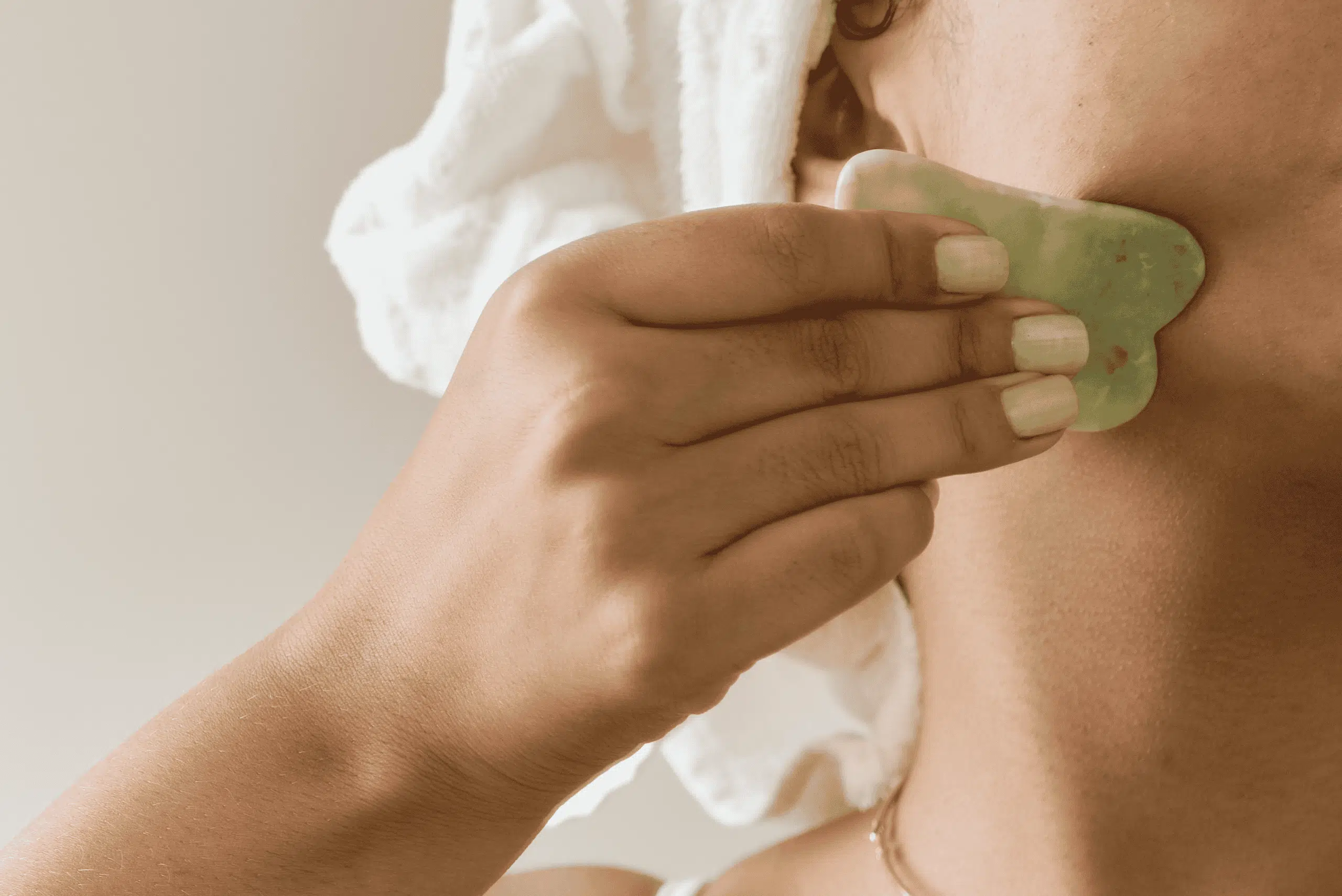
The resurgence of traditional Chinese medicine in modern vanity routines has brought the smooth-edged stone into nearly every bathroom cabinet. Yet, as with any physical therapy, the question persists: can gua sha be harmful? For the wellness-focused professional, the answer lies in the nuance of application. Gua sha is designed to be a rhythmic, meditative practice that moves lymph and releases muscular fascia; however, when approached with a “more is better” intensity, it can quickly lead to skin trauma. By mastering the balance between firm pressure and gentle glide, you can transform this ancient ritual into a safe, non-invasive alternative to more aggressive aesthetic procedures.
Avoiding the Pitfalls of Improper Technique
The most common mistakes that lead to negative outcomes in facial gua sha involve friction and angle. Without a high-quality facial oil to act as a lubricant, the stone creates significant drag. This friction doesn’t just feel uncomfortable; it can stretch the delicate elastin fibers of the skin, potentially leading to premature sagging—the exact opposite of the desired lifting effect.
- The 15-Degree Rule: The tool should almost lay flat against the skin, not at a sharp 90-degree angle, to ensure the pressure is distributed safely.
- Wiggle at the End: Incorporating a gentle vibration at the lymph nodes helps encourage drainage without needing to press harder.
- Upward and Outward: Always moving in the direction of lymphatic flow ensures that fluid is moved toward the drainage points rather than pooling in the center of the face.
When Gua Sha Becomes Counterproductive
For those with highly sensitive skin or conditions like rosacea, the increased heat and blood flow generated by gua sha can sometimes trigger a flare-up. In these instances, the “harm” isn’t permanent, but it can cause significant discomfort and redness. Similarly, using a tool that hasn’t been properly sanitized can introduce pathogrens into the pores, leading to “mechanical acne.” For the health-conscious woman, the ritual must include a clean tool and a clean canvas to remain a benefit to the skin’s microbiome.
Conclusion: Respecting the Skin’s Boundaries
Gua sha is a beautiful marriage of ancient wisdom and modern self-care, provided it is practiced with respect for the skin’s biological boundaries. When performed with intention and the right botanical support, it is a low-risk, high-reward habit that supports both mental calm and physical radiance. By prioritizing education over hype, you ensure your routine remains a source of healing. To find the perfect organic oils to provide the necessary “slip” for your practice, Essance Skincare offers handcrafted, plant-based solutions designed to nourish the skin while you sculpt.
