



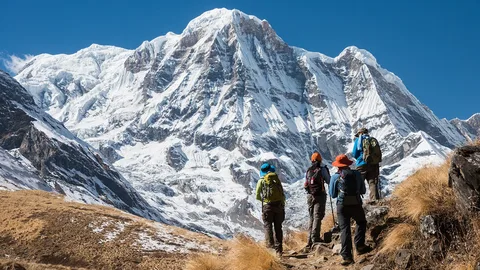
Trekking the Annapurna Circuit isn’t just a walk through the grand Himalayas’ scenery, it’s an emotional endurance test that challenges and changes you. The journey across this rugged land with its rolling landscapes is one of punishing climbs, fickle weather, and Lymm’s ever-present sense of isolation. But it is in the battles that you fight that you find out how strong you can be, how much fortitude, empathy, and growth you have inside!
Annapurna Circuit Trek Difficulty Psychologists often refer to resilience as the ability to bounce back or spring back in the wake of these challenges. The Annapurna Circuit provides an ideal setting, both for assessing and for developing this quality, with its inspiring views and arduous terrains. As you travel the track, you will face occasions of fear, frustration, fatigue, and self-doubt, and at each challenge, there is an opportunity to develop emotional resilience. It’s not just about summiting or reaching the next camp — it is about what you make of the emotional roller coaster that comes with the journey and what you learn about yourself along the way.
Perhaps the first lesson in emotional resilience on the Annapurna Circuit is learning how to be patient. The trek that usually takes 15 to 20 days is a test of stamina as well as mental strength. As you ascend, the air gets thinner, and the physiological toll it takes on your body to respond to the altitude becomes greater. This can be discouraging at times when each step is heavier than the last. But learning to be patient with yourself, to embrace a natural ebb and flow of energy, to honor your body’s need for rest, are all elements of emotional resilience. When you release those expectations and surrender to what your body can handle, you make room for the mental work of getting stronger.
It forces you, too, to grapple with uncertainty, as any successful day of hiking through snow and ice must, or you could easily die. The weather can turn on a dime, routes can become blocked by rock slides or avalanches, and you can unexpectedly end up switching plans. It is easy to become fearful when it seems things are out of control, but it’s an opportunity to build emotional muscle. You start to understand that you have no control over certain aspects of your journey. Embracing uncertainty, releasing tight plans, and getting good at pivoting in the moment are the skills you need to strengthen your emotional muscles. Resilience is learning how to remain calm and focused when everything looks beyond your control.
The friendship with like-minded trekkers and encouragement of people in the mountain villages on the Annapurna Circuit are other elements of what I believe makes you emotionally strong. Though you might find yourself feeling isolated for much of the journey, you are truly in it together with the other climbers. These links serve to help you remember that you aren’t alone in the midst of your struggles. Even if it’s just telling stories over a cup of tea or guiding a fellow traveler past a particularly challenging part of the path, these little acts of kindness form an emotional connection that can shore up your grit. It is the experiences we share that show you that emotional strength isn’t just about how strong you are internally, but how strong the bonds are that you form with others along the way.
Additionally, the emotional fortitude on the Annapurna Circuit is fostered in learning how to happily navigate the highs and lows of the trek. Especially so is the ascent to the Thorong La Pass, one of the circuit’s highest points, which climbers often have to draw their deepest reserves of emotional and physical strength to cross. And it’s at moments like this that it’s easy to get overwhelmed and tired, but it’s also where the victory of resilience can be most keenly felt. Earning the pass is more than just an athletic feat — it’s a testimony to the powerful and sometimes misunderstood mental and emotional capacities needed to find one’s way through moments of metaphorical (and sometimes literal) ‘wanderlust.'”
At the end of the day, the Annapurna Circuit is not just about finishing a trek—it’s about showing you who you are when the going gets tough and proving to yourself that you can overcome whatever obstacles get thrown in your way. But by leaning into patience, allowing yourself to ride the emotional roller coaster, cultivating a sense of community, and accepting that uncertainties will always be present, you may find the roller coaster slows, your heart softens and opens, and you develop a well of emotional strength that you can draw on long into the future. The success on the path of Annapurna is not so much in the conquered summit or in completing the circuit, but in the emotional fortitude you’ll inevitably gain along the way.
Emotional Resilience Explained
Annapurna Circuit Trek Itinerary Resilience is the capacity to survive hardship, difficulty, and other stressors successfully without allowing them to undermine your emotional well-being. It’s not about living a life free of adversity, but about building up the strength to rebound from the hardships that come your way. On arduous trails like the Annapurna Circuit, a certain emotional toughness is necessary.
This strength is born from the ability to cope with overwhelming situations and to retain trust and a positive attitude. It’s about encountering challenges — whether in the form of bad weather, physical fatigue, or self-doubt — and getting through them, rather than being put over. Emotional resilience does not mean emotionally suppressing , but processing emotions properly. It includes recognising sensations of fear, frustration, or sadness, yet continues with action and not letting this emotion drag us down and impede any forward movement.
To fully comprehend emotional resilience, however, it is important to regard it as a dynamic process that encompasses self-awareness, emotional regulation, and mental flexibility. It’s not a quality that people are born with but a skill that is learned, and you can build up emotional resilience with practice. It is that toughness, as you said, that enables you to focus on the bigger picture and not be defeated by the moment, a key factor certainly to success and victory, and an adventure like Annapurna and one’s life.
Getting Ready for Your Trip
Preparing to travel the Annapurna Circuit is not only a physical challenge, it’s an emotional one too. You need to decide beforehand how you’re going to deal with the mental anguish of being alone in desolate terrain, at high altitudes, and toiling for long days in a setting to which you’re not accustomed. Mental and emotional conditioning can play a huge role in how you handle these stresses.
Sure, just start by recognizing that the journey will have ups and downs. Not being able to get through a corner or a session, being frustrated with the progress, and questioning your capabilities – all of these are a given, and getting your mind in the right place to deal to prevent these from happening is so important. This is where the expectations fall in. Just keep in mind that the journey will be challenging, both mentally and physically. Recognizing this in advance will reduce surprises as the journey unfolds.
Be sure to hike the trail, learn about the landscape and cultural context, and be ready for something to go wrong. It gives you something to focus on with a long day ahead, including the weather in your head the night before, the terrain, and what if you have to catch up on the following day. Changing your mindset to be more flexible, rather than rigid, can alleviate the anxiety of constant change, making you feel out of control.
Also, do things that help fill your emotional toolbox before you go—building a meditation practice, writing in a journal, or working on visualization can help you mentally prepare for the trip ahead. The more you know your emotional triggers and how to handle them, the better the trek will go — and the more rewards you’ll get. By completing this emotional prep work, you are giving yourself the tools to succeed, you are getting yourself to the place where you are strong enough to face the best and the worst that will come your way!
Developing a Positive Attitude
Annapurna Circuit Trek Altitude Thinking positively is a huge player in anything we do, especially somewhere difficult like the Annapurna Circuit. The journey will be filled with hills, moments of fatigue, self-doubt, and frustration, but I believe that if you could have a positive perspective, it could help reframe these adversities into development opportunities.
(When you choose instead to do things from the heart, when you decide to work from a space of doing it because it feels fun/amazing/good, you feel GREAT along the way, right?) (Let me be clear, vibes are great – but what’s even better is learning to work from a true belief space when you know you are fully living a life aligned) An easy tip to adopt a positive mindset, then, is to focus on the aspects of your journey that you CAN control. You can’t do anything about the weather or whatever external circumstance, but you can make your approach to the situation. Learn to embrace setbacks, metaphorically and literally: If a storm slows you down, or the going gets steep, try to remember how this is part of the journey, not a hindrance to it.
Mindfulness and positive self-talk are useful techniques to help change your mindset. For instance, rather than concentrating on how far you have left to go, concentrate on the progress you’ve made, even if it seems small. Let yourself take pride in each advancement forward, whether that be through a physical or mental obstacle. View challenges as training for more resilience, and eventually, the whole journey is a lesson.
A positive mindset and gratitude go hand in hand. Amid the struggle, make an effort each day to stop and appreciate the natural beauty around you, the progress you’re making, and the strength you’re developing. By recognizing your successes and keeping the faith, it makes it possible to get through even the toughest times, and that gives us courage and strength in the mind and soul, keeping us on the path we set for ourselves with a smile on our faces.
Wrestling with Emotion
The Annapurna Circuit, like all such strenuous adventures, has its share of psychological hurdles. From smashing through fatigue to facing fears and demons, there are plenty of points at which it’s going to push your emotional meter to the limit. The extent to which there is meaning in suffering is the extent to which it opens us up to further growth and emotional toughness.
The beginning of overcoming emotional difficulties is recognition. Resisting what you are feeling will only cause internal struggle. Simply acknowledge that you feel frustrated, scared, or sad given the circumstances. Once you’ve admitted it to yourself that it’s normal, you can begin trying to work your way through it with a less extreme mindset.”
Annapurna Circuit Trek Highlights Emotional challenges are moments to remind yourself that the worst lies just before the advances. For one, when they face fear — be it about the sheer physical challenge of their walking or being by themselves — it can lead to opportunities to develop deeper self-knowledge and courage. With every emotional struggle you face, you have the opportunity to practice resilience, patience, and presence.
At times, when the going gets tough, try writing down your thoughts or speaking to other trekkers. When you use your feelings to connect with others, it can reduce the emotional load and give you access to new ways of working through those feelings. Keep in mind, emotional struggles are not symptoms of weakness but of the complexity of human beings. When you embrace them, you make it possible for you to come out of the journey stronger and better.
How to Manage Isolation
The Annapurna Circuit can be a very lonely place. There’s the sheer size of those mountains, the physical challenges, and the weeks and months of time spent apart from family and friends that can bring feelings of isolation and disconnection. Yet there are a variety of ways to deal with being isolated that can make it an opportunity for introspection and growth instead of an obstacle.
One area is to bring solitude into the fold as a place for conscious reflecting and mindfulness. Rather than construe isolation as an unfortunate predicament, interpret solitude as an opportunity to connect with your deeper self. Take this time to be still and meditate on your journey, think about your priorities, and why you are here, etc. Mindfulness can help keep you in the here and now so that you feel less lonely.
It can also give you emotional support and community by connecting with others on the same trek. You might find yourself walking alone for most of the way, but always know that you are not the only one who feels that way. Chatting, cheering one another on, or just sitting quietly together can help to ease the emotional strains of separation. Such shared trekking experiences often lead to great friendships between trekkers.
Finally, if you’re able to stay in touch with loved ones back home, that too can help you stay emotionally anchored. A brief message can remind you of the connections awaiting you on the other side. At the end of the day, dealing with isolation on the Annapurna Circuit is a matter of seeing this as a journey of self-discovery and turning inwards when you are alone to work on tempering yourself.
Developing Mental Toughness in the Face of Adversity
Mental fortitude is as much a part of the overall journey, especially one as demanding as the Annapurna Circuit. During the trek, you will struggle—whether in the face of intense weather, physical fatigue, or the constant stress of high-altitude living. But it’s in those battles where you gain the mental strength to beat back adversity and become a better person.
Mental toughness isn’t a matter of stubbornly muscling through something without admitting defeat, far from it; it’s being able to meet adversity with a calm, focused mind regardless of how overwhelming it might appear. The Annapurna walk makes you adjust to yourself in ways that exceed your normal boundaries, so you naturally push through fear and pain.
Annapurna Circuit Trek As you grow very tired or afraid or frustrated, remember your deeper motivation and your sense of the transience of this difficulty. THEY are exactly the barriers building you up, making you stronger. For example, surviving a gnarly climb or gnarly section of trail builds your internal strength. Each time you keep going despite the adversity, you just strengthen your mental muscle, the mental muscle that will get you to the end of this hike, and beyond in everything you do.
Resilience, reflection, and resolve are habits that build mental toughness. It’s not about letting obstacles dictate your life, but rather about recognizing the power of obstacles to give you that grit and character to meet whatever comes your way, be it on the trail or in life.
It’s perfectly normal to have your fears and your insecurities when tackling a challenge of this magnitude, and you are bound to clash head-on with them repeatedly in an endeavour this gruelling. Either the fear of failure, the fear of the physical discomfort, or self-doubt in your ability to complete the trek can overpower you. But learning how to move through those feelings is a key part of emotional resilience and mental toughness.
The first thing to do to control fear is to accept its presence. We tend to shy away from fear, resist it, or even bury it, but there is power in facing fear. On the Annapurna trail, fear could come in the form of fear of altitude sickness, fear of the technical nature of the trail, or fear that you might not be able to handle the trek. By doing so and realising the fact that being afraid is a human being’s reaction to something, you can move from the point where you are feeling helpless and into feeling a sense of power in the face of your fear.
Whereas self-doubt sets in like a plague, the second the body and mind are tired. It’s natural to doubt whether you can even carry on, especially once the fatigue sets in. In these moments, it is important to stop and reroute your thought process. Think back to past successes, what this process means to you, and the fact that you’ve already done the incredibly difficult by surviving the things you’ve been through in your past. You can help curtail feelings of being overwhelmed by encouraging yourself and by breaking things down into smaller, more manageable steps.
There’s an ebb and flow to fear and self-doubt. It takes a cocktail of mental strategies — routines such as mindfulness and positive self-talk — as well as the belief that you can handle anything. With experience, you’ll discover that fear and doubt aren’t obstacles but stepping stones to greater strength.
Motivation in Trying Times
The Annapurna Circuit is a physical and mental challenge. And when the road is long, the weather is ugly, and your body is tired, motivation is at a premium easily lost. The hardest thing is having the strength to push through when it gets rough, but it wouldn’t even be a challenge if you already had the answer.
When times are difficult, the motivation to succeed often comes from reconnecting with your “why.” Where did you get the idea? Is it to test yourself, to get some clarity, to be in awe of the Himalayas? Thinking about your personal goals and what you are trying to achieve with your trek helps to motivate you again. On hard days when you’re climbing, you can visualize the view from the top, the feeling of accomplishment, and the lessons learned along the way.
Trek Nepal Annapurna Circuit Segmenting the journey into smaller goals is also useful on days when motivation eludes you. But don’t only keep your eye on a far-off summit — celebrate every hill you traverse. Whether it be getting to the next camp or simply being able to take one more step with legs that feel like lead, it’s these small victories that act as a constant reminder that you’re getting closer to your goal.
Another great source of motivation is finding out their own strength. Think about these challenges in the past that you overcame. Think about how far you have come – not in physical distance, but in your emotional and mental journey. Amidst adversity, motivation is knowing that you are quite capable of much more than what you are now.
Learning through Failures of the Way
You will learn to appreciate this on the hike, the ugly side of things, some of the lessons you will never get can be found on the trail, and learn to accept that you will get setbacks on this journey. A storm could keep you stranded in a village for an additional day, or a difficult section of the trail could wind up taking longer than planned to traverse. You can choose to accept them in a way that isn’t about failure, but rather, about growth and realizations. From every failure, there is an opportunity to do things differently next time, to new perspectives or other conditions.
For example, a day of rest may seem frustrating, but it is a space to rest, in several ways. It’s a lesson in hearing what your body has to say — and respecting its needs. A particularly challenging section of the trail might point out some areas in which you can improve your riding ability or endurance. So in that sense, setbacks foster humility and flexibility by teaching you how to moderate your expectations and respond to roadblocks with more fluidity.
Finally, setbacks along the path are the path, not something to be avoided, but something to be embraced. Every loss is a chance to learn and strengthen from the environment and gain the upper hand in the system, thus increasing the satisfaction of your ultimate victory.
Celebrating Victory and Progress, the Symbol of Victory Palm and Progress Bloom
Finishing the Annapurna Circuit is a feat, and a feat that stands for more than getting to the end. The journey — the challenging moments, the moments of persistence, and the moments of elation- defines a great servitude of self-growth. To me, it’s about celebrating not just the physical summit but the emotional and the mental, and the spiritual summit that we went through to get there.
Annapurna Circuit Trek Map Victory on Annapurna is the product of a thousand small successes. It’s those silent points of resolve when you just carry on despite feeling too tired. You know, the ones where you overcame your fears, learned from failure, and dared to face your fears? All build up toward your transformation.
Feasting on victory isn’t just about indulging in the destination—it’s also about savoring the journey. Take moments to ponder how you grew, what you learned, and how strong you became. Recognize yourself for how you have evolved, how far you have come, physically and emotionally.
It’s also crucial that you recognize your strength. Whether it’s through writing in a journal, exchanging tales with other trekkers, or simply finding a quiet space to sit and gaze at the beauty of the surroundings, give yourself the time and space to feel proud about what you’ve achieved. This contemplation enhances the feeling of accomplishment and enables you to take the lessons learned on Annapurna to future pursuits.
Ultimately, the richest reward of any journey is personal growth. Acknowledging these victories, small and large, makes you FEEL the change inside, and therefore, you prepare yourself for any other new adventure with even more emotional toughness and will.
How hard is the Annapurna Circuit?
The Annapurna Circuit is one of the most difficult treks in the world thanks to its steep inclines, high high, and unpredictable weather. The level of difficulty of the hike will depend on things like how fit and experienced you are and how fast you hike.
Physical challenge: The hike, which takes 15 to 20 days, is physically demanding, and travelers experience substantial elevation changes, especially when going over the Thorong La Pass, located at 5,416 meters (17,769 feet). Endurance is excellent for the trek, which involves long hours of walking each day of the trek, up to 8 hours.
Altitude: Because of the high altitude, you may also feel altitude sickness if you don’t acclimate correctly. The climb is above 17,800 feet (about 5,400 meters), above the so-called “death zone” (8,000m), where oxygen levels are sparse.
Weather: Himalayan weather can be unpredictable, and at high altitude, it is prone to rain, hail, snow, or sudden cold, especially from October to April.
It’s hard, but with proper training and the right mindset, many people can finish the Annapurna Circuit. But it’s also important to listen to your body and be prepared for altitude and weather.
Can beginners do Annapurna?
Yes, beginners can hike the Annapurna Circuit, but being properly prepared is crucial. While no technical climbing skill is needed, beginners should be in good physical condition and have stamina because the trek involves some degree of physical challenge.
- Training: Those new to this sport should incorporate some form of regular cardio training (hiking, jogging, or even walking) into their schedule to help increase their endurance. Otherwise, you must walk on hilly trails to simulate trekking.
- Acclimatization: Altitude sickness is a dangerous condition, and new pilgrims should comprehend the significance of effective acclimatization. “Taking rest days intentionally at a few spots along the trek allows your body to get used to the high altitude.
- The right gear: For beginners, spend a bit (but not too much) on hiking boots, the owner of a good waterproof jacket and warm layers, and a sturdy backpack to carry essentials. The need for good preparation cannot be emphasized further because of the necessity for appropriate equipment to make it a safe passage.
The hike is difficult, but even the inexperienced and unfit can complete it with proper preparation and planning. A lot of guided groups are beginner-friendly and may offer a measure of added safety and support.
How to train for the Annapurna Circuit?
Annapurna Circuit Preparation Proper preparation is a key to making this trek enjoyable and to staying safe. Here’s how you can prepare:
- Physical Exercise: Endurance is King. If there is one thing that you need to improve when exercising, it’s your endurance. Start training months beforehand by doing cardio activities, such as hiking, walking, and running. It is also important to train on elevation, so climb if you can go uphill or at a higher elevation.
- Acclimatization: Acclimatization is very necessary on the Annapurna Circuit. Don’t rush too much and put yourself at risk of getting altitude sickness. Schedule a few days of rest to become acclimatized to the altitude. Upward gradually and no gripping with a vengeance.
- Gear and packing: Have the correct gear for a range of weather conditions, including waterproof gear, a good sleeping bag, trekking poles, and good boots. Ensure that your backpack is light but includes snacks, water, medicine, first aid supplies, and kits.
- Preparation mentally: For the long days of trekking and the challenges that accompany hiking in high altitudes, mental preparation is crucial. It will be uncomfortable, and you should concentrate on keeping a positive spirit. Read up on the conditions and culture of the trek so that you are mentally prepared.
- Guides/permits: As with any trek, get your Annapurna Conservation Area Permit (ACAP) and TIMS (Trekkers’ Information Management System) card sorted. You may want to hire a guide or join a group for extra safety.
Good preparation can help ensure that you enjoy the trek.
Can you climb Annapurna without a Sherpa?
Annapurna Circuit Trek Cost Yes, it is technically feasible to do the Annapurna Circuit without a Sherpa guide, but there are a few things to think about:
- Navigation: Annapurna Circuit is well signed and marked very clearly, so quite a few trekkers find it easy to go there independently. But trail conditions can shift, and some parts of the remote landscape may not have easy access to resources such as food or medical care.
- Security: With a guide or porter, you’ll also be safer, especially if you’re not used to trekking at high altitude. A guide can help you navigate difficult spots, cope with altitude sickness, and give you valuable information about local customs and the environment.
- Altitude sickness: Guides are experienced at helping trekkers acclimate to altitude, which can be dangerous. Without a guide, you won’t know the symptoms of altitude sickness, which can become deadly.
- Logistics: While the Annapurna Circuit is well established and you can find guesthouses along the way, a guide makes logistics, including accommodations, meals, and any unexpected issues, easier.
If you are an experienced high-altitude trekker and have no problem finding your way in remote locations, you can trek the Annapurna Circuit without a guide. The experience is fine – interesting – and most who don’t hire a guide (a good idea if you aren’t that experienced – and it’s safe – and it’s more fun) walk away with self-satisfaction – but no richer. Guided treks are by no means required, but many trekkers opt to bring along guides for extra support and knowledge.
