



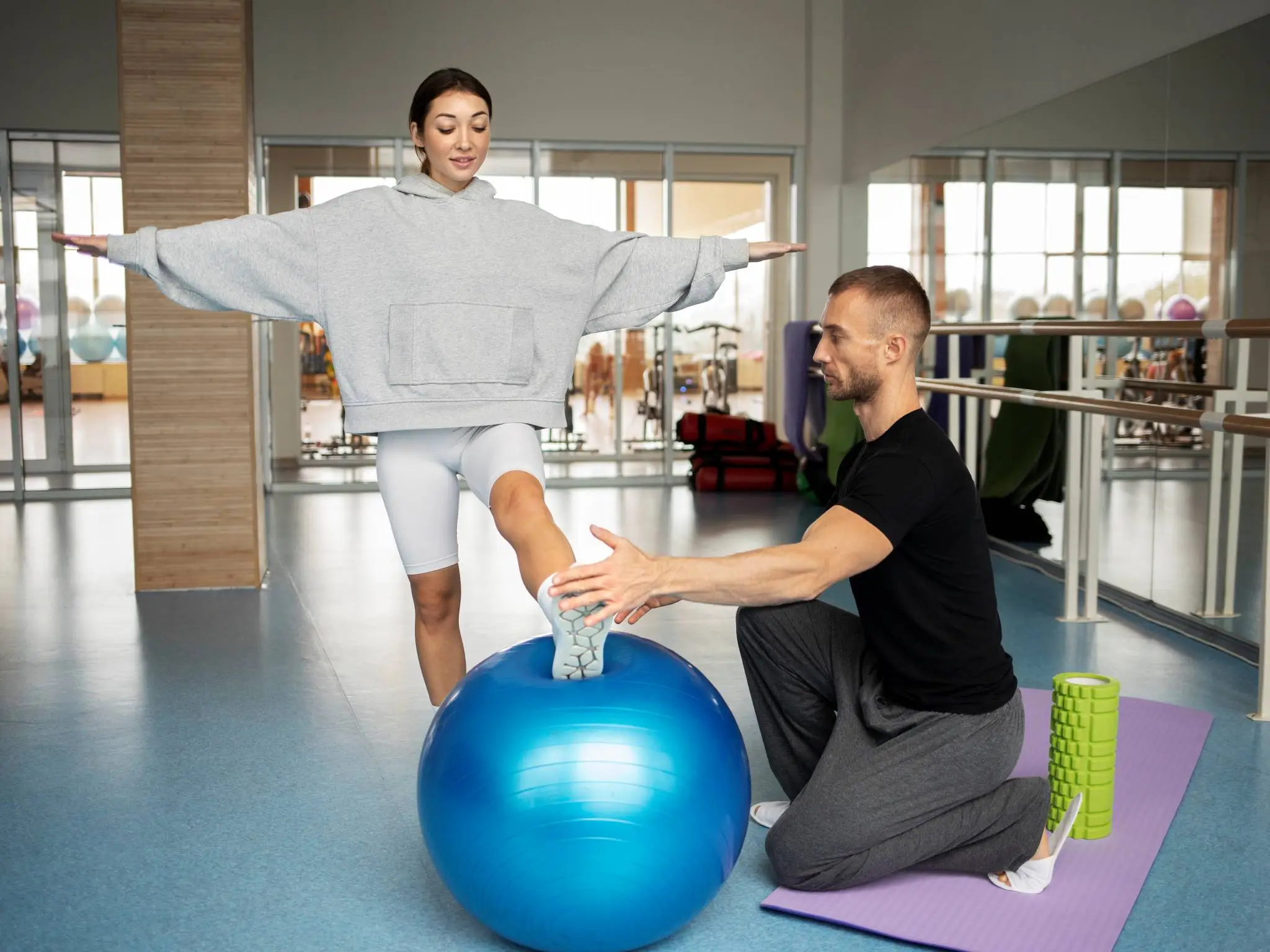
When most people go to the gym, they think about a workout that will promote weight loss or muscle building. This makes sense. Yet there’s a whole realm of physical skills that get overlooked by conventional exercise routines. Balance and coordination are not merely things that athletes and dancers need; they impact our physical movement every day, they’re how our body reacts when we need to respond to the unexpected, and they dictate how well our muscles actually work together when it counts.
The problem is that running on a treadmill or holding a free weight does nothing to challenge these skills. Such exercise is completed in controlled patterns with stable surfaces. The body knows what’s going to happen next. But activities with consistent movement change, position shifts, and forces beyond a person’s control are the very movements that create balance and coordination.
What Coordination Is Compared to Just Being Strong
Muscle strength refers to the amount of force a muscle can produce. Coordination involves the nervous system’s ability to organize multiple muscles simultaneously and sequentially into appropriate patterns over time. You could be the strongest person in the world but if your brain doesn’t learn the correct firing patterns in terms of synergy and timing, then you’re still going to move awkwardly.
Coordination occurs through practice involving complex movements. This is not simple practice like a bicep curl. It’s practice engaging multiple joints while body position consistently changes. There’s an inherent complexity in exercise like martial arts, gymnastics, and climbing that allows for such practice. For example, jiu jitsu Sydney training has your body constantly positioned to maintain control while someone else goes against you and moves sporadically.
Why Balance Training Is More Important than People Realize
Balance isn’t merely standing on one foot. It’s maintaining control of your center of mass over your base of support—even when that base is unsteady, wobbly or moving. It occurs every time you step onto an uneven space, reach for something over your head while standing, or try to stabilize yourself from falling.
The problem with many contemporary exercises is that they occur on a flat and stable plane. Gyms are designed for such things to be predictable. But life is not predictable. Training your balance requires it to be placed in situations where it must constantly adjust. Grounded exercises where movements occur in multiple planes, levels change or resistance is against movement created by the body creates a new level of balance stability that standing on a Bosu ball cannot accomplish.
How Movement Complexity Facilitates Athletic Ability
Athletic ability is defined by how well someone can control their body through space. This means understanding where your limbs are positioned without looking at them, adjusting strategy mid action as well as delivering stability despite resistance from others or fatigue.
Activities like grappling, wrestling, or groundwork do this well through partnered involvement. When someone moves against you actively and dynamically, your own body recognizes levels, weight shifts and awkward stabilities. Each minute adjustment within each learning session becomes hundreds of different adjustments that teach your nervous system how to sequence otherwise unknown patterns of movement.
The Unexpected Daily Benefits
Those with better coordination often realize it without even telling them so. They’re more stable on stairs, less anxious on slippery surfaces and quicker to recover when they trip. The reflexes developed by such movement patterns automatically translate to real life moments that would otherwise result in falls or injury.
In addition, due to consistent effort required when working with body parts in constant relation to each other (namely the torso and limbs), people become more aware of their movements in general. Less awkward motions occur because the trained individual knows better what they need to do for smoother transitions. Improved posture becomes automatic instead of just desired.
Learning Skills That Stick
One of the benefits of securing this skill through balancing and coordination is that they’re not dependent solely upon strength. For example, once someone stops training strength-based or cardiovascular exercise, those qualities rapidly diminish. But these qualities are skill-based. Those options learned from a young age will always remain despite possibly failing to acquire other skills in adulthood.
For this reason, activities like this combine physical challenge with skilled learning and interest remains long term as there’s always another position, skill or movement pattern to learn or master. Progress occurs through physical development as well as skill acquisition—two separate arenas—which promotes satisfaction beyond merely promoting a heavy weight at the gym.
What Should be Looked for in Skill-Building Opportunities
The best training for coordination and balance involves unpredictability. Partnered movements, doing work on unsteady surfaces or requiring constant movement pattern adjustments challenge the stability systems in productive ways.
Ground-based martial arts, gymnastics, climbing, etc., all inherently include such movement parameters. What needs to be accomplished does not rely solely on memorization but instead real time troubleshooting by the nervous system that needs different solutions week after week to develop strategy.
The physical benefits are clear, but the confidence associated with controlling one’s body in seemingly vulnerable positions impacts how they traverse through space. Those skilled tend to take more physical risks and feel more comfortable with their bodies when they must respond quickly to unexpected situations requiring physical adaptations. That’s the kind of fitness that matters outside the gym!
