



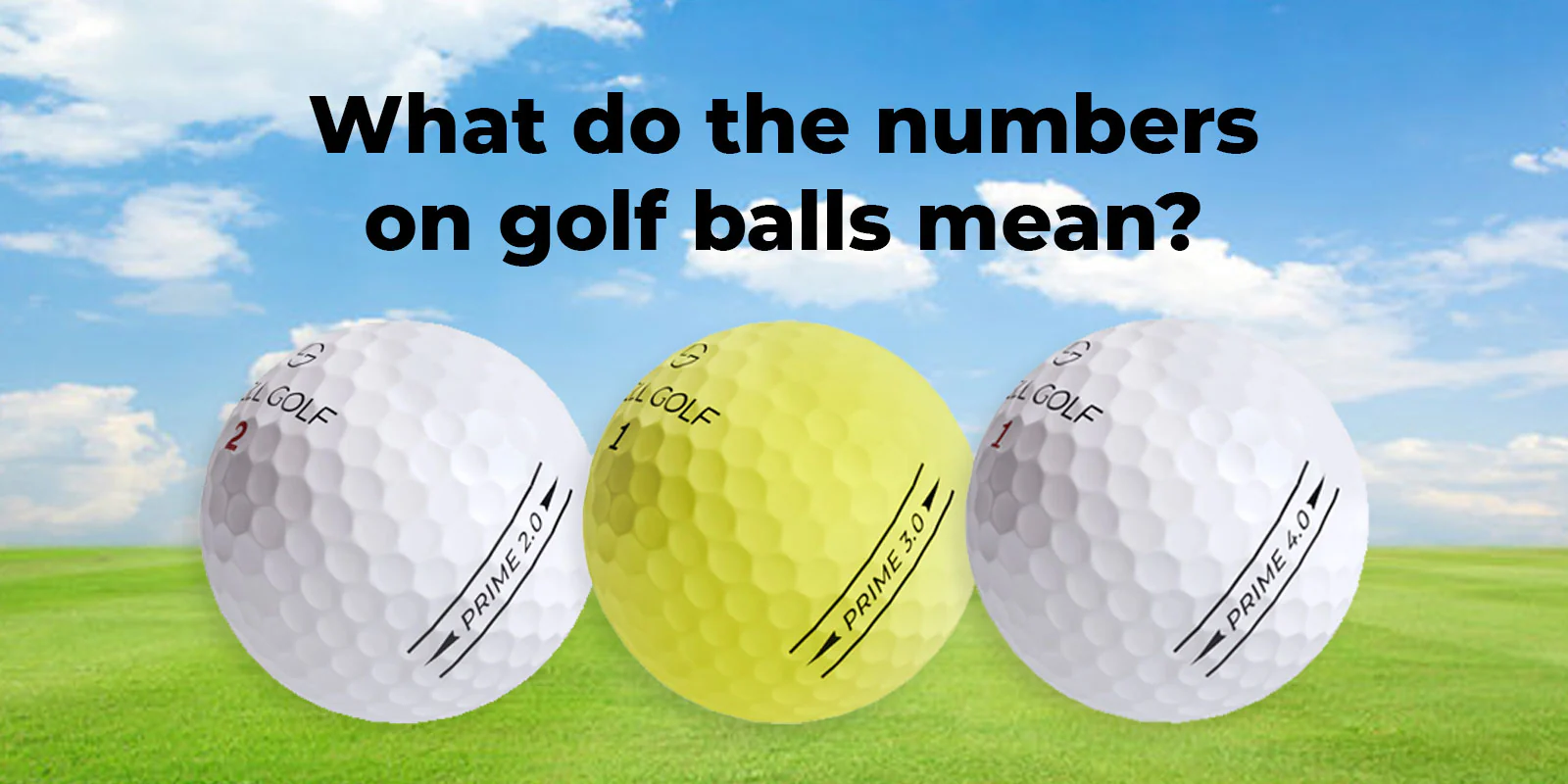
Many golfers have noticed the small numbers printed on their golf balls but may not fully understand their purpose. If you’ve ever wondered what do the numbers on golf balls mean, you are not alone. These numbers serve practical functions that range from simple identification to performance classification. Understanding them can eliminate confusion and help you make more informed equipment decisions.
Although the numbers may appear minor, they play a meaningful role during play and can even provide insight into the ball’s construction and intended use.
The Most Common Number: Player Identification
The number most golfers notice is the small single-digit number, typically ranging from 1 to 4, and sometimes extending up to 8. This number’s primary function is simple: identification.
During a round of golf, especially in group play, multiple players may use the same brand and model of ball. The number helps distinguish one player’s ball from another’s. For example, if two players are using the same model, one might choose number 2 while the other selects number 3 to avoid confusion.
This identification system is particularly useful when:
- Playing competitive rounds
- Participating in tournaments
- Hitting into areas where multiple balls may land
- Avoiding penalties caused by striking the wrong ball
The small printed number ensures clarity and helps maintain proper rules compliance.
Double-Digit Numbers: Compression Indicators (Historically)
In past decades, golf balls often featured double-digit numbers such as 90 or 100. These numbers traditionally indicated compression rating, which refers to how much the ball compresses upon impact.
Compression influences feel and performance:
- Lower compression balls generally feel softer and may benefit players with moderate swing speeds.
- Higher compression balls are typically firmer and may perform better for golfers with faster swing speeds.
However, modern ball engineering has evolved significantly. Many manufacturers now design multi-layer balls where compression ratings are less prominently displayed or marketed differently. While compression still matters, it is no longer the sole performance indicator it once was.
Three-Digit Numbers: Dimple Count
Occasionally, golfers encounter balls with three-digit numbers such as 332 or 392. These numbers often represent the number of dimples on the ball.
Dimples play a critical role in aerodynamics. They reduce drag and help generate lift, allowing the ball to travel farther and maintain a stable flight path. While dimple count alone does not determine performance, it is part of the aerodynamic design strategy.
Modern golf balls are engineered using precise dimple patterns to:
- Optimize trajectory
- Improve carry distance
- Enhance stability in windy conditions
- Promote consistent ball flight
Rather than focusing solely on dimple count, golfers should consider the overall aerodynamic system.
Why Are Some Numbers Red and Others Black?
Another detail that often raises questions is the color of the printed number. Most balls feature either red or black numbers. In many cases, color distinctions help differentiate models within a product line.
Traditionally:
- Red numbers have often been associated with lower compression or softer-feel models.
- Black numbers have been linked with firmer, higher-compression designs.
While this convention is not universal across all brands today, the color can still signal subtle differences in construction. The distinction allows players to quickly identify the type of ball they are playing.
Do the Numbers Affect Performance?
The number printed on the ball itself does not directly change performance. It is simply an identifier or informational marker. What truly impacts performance is the ball’s internal construction, cover material, core design, and aerodynamic engineering.
Performance differences come from factors such as:
- Core composition and energy transfer
- Mantle layers that regulate spin
- Urethane or ionomer covers affecting feel and control
- Dimple pattern influencing flight characteristics
Understanding the numbers helps clarify what you are using, but selecting the right construction based on your swing is far more important.
Choosing the Right Ball for Your Game
Instead of focusing only on printed numbers, golfers should evaluate how a ball complements their individual playing style.
Consider the following:
Swing Speed
Faster swing speeds often benefit from balls designed to optimize compression and reduce excess driver spin.
Short-Game Priorities
If control around the greens is your strength, look for a urethane cover that enhances spin and feel.
Playing Conditions
Frequent wind exposure may require a ball designed for aerodynamic stability.
Consistency
Using the same model consistently allows you to better understand trajectory, spin rates, and distance control.
When golfers understand both the visible markings and the underlying technology, they can make smarter purchasing decisions.
Confidence Through Knowledge
Golf is a detail-oriented game. Small elements — from alignment to equipment — influence confidence and performance. Knowing what the numbers on your golf ball represent eliminates unnecessary uncertainty and allows you to focus fully on execution.
For golfers who value performance-driven engineering and transparent product design, Snell Golf provides thoughtfully developed golf balls built to meet the demands of competitive and everyday players alike.
If you are ready to gain deeper insight into your equipment and elevate your game, explore your options and choose a golf ball that aligns with both your swing and your scoring goals. Understanding the details is the first step toward playing smarter and performing more consistently on the course.
