



Walk into any home kitchen in Lima and there’s a good chance something starchy is sitting on the counter. Maybe it’s a pile of bright yellow papa amarilla for tomorrow’s causa, or a bag of chuño soaking for a weekend stew. The same picture plays out thousands of miles away in New York, where someone searching online for Peruvian food near me in Astoria might be surprised to discover a cuisine built on the potato.
The humble tuber isn’t a side dish in Peruvian cooking. It’s the throughline that connects a pre-Inca farmer, a colonial fusion kitchen, and the plate in front of you tonight. The story of how it got there goes back about ten thousand years, and it starts in the Andes.
Key Takeaways
|
Why Potatoes Became Central to Peruvian Cuisine
The short answer comes down to three things working together.
- First, the potato is native to the land. Peruvian cooks have had it for thousands of years longer than anyone else in the world. By the time Europeans even saw their first potato, Andean farmers had already been crossing varieties for a hundred generations.
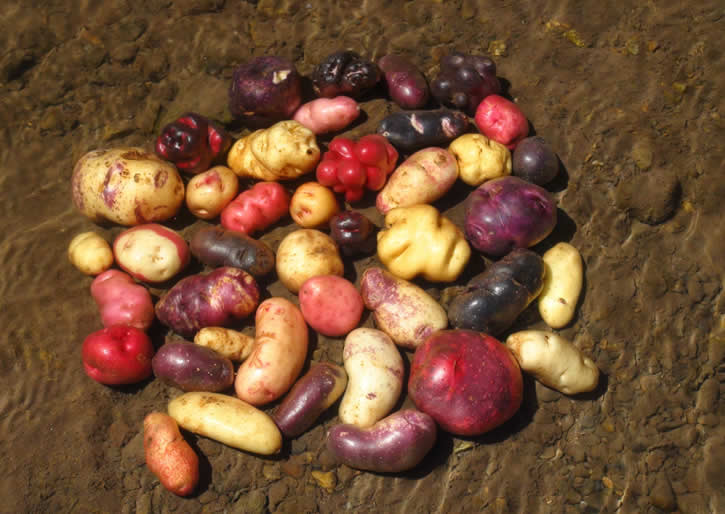
- Second, the Andes gave the plant conditions no other region could match. The vertical stack of microclimates in those mountains produced thousands of distinct varieties, each adapted to a specific altitude, soil, and growing season. That depth of variety is what still gives Peruvian kitchens such a wide palette to work with.
- Third, when the Inca Empire organized the Andes into a single civilization, potatoes stopped being just food. They became the backbone of daily meals, state storehouses, religious offerings, and the trade routes that fed an army. Once a crop reaches that level of cultural integration, it doesn’t leave. Even five hundred years after the Spanish arrived, the potato still anchors a Peruvian plate.
The Andean Origin of the Potato
The potato’s story starts in a place few outsiders think of as a cradle of agriculture, the thin-air highlands around Lake Titicaca. The archaeological record and the genetic evidence point to the same place for the same reason.
Where Potatoes Were First Domesticated
Lake Titicaca sits at about 3,800 meters above sea level, straddling the border between modern Peru and Bolivia. Archaeological and genetic research suggests that potatoes were first domesticated around 8,000 years ago in the Andes near Lake Titicaca, along the present-day border of Peru and Bolivia.
This region is widely recognized as the birthplace of the cultivated potato. That one patch of highland is the ancestor of every French fry, mashed potato, and gnocchi on earth.
How Over 4,000 Varieties Developed in the Andes
The reason Peru has such a wide variety of potatoes comes down to geography. The Andes stack dozens of microclimates on top of each other inside a short vertical distance. Valley floors, cloud forests, alpine grasslands, each with its own frost patterns, soil, and growing season. Over generations, Quechua and Aymara farmers selected and crossed potatoes for each niche. A variety that thrived at 2,500 meters wasn’t the same one that worked at 4,000.
The International Potato Center, headquartered in Lima, recognizes more than 4,000 edible varieties worldwide, and most of them are Andean.
How the Inca Empire Built a Civilization on the Potato
By the time the Inca Empire peaked between roughly 1438 and 1532, the potato wasn’t just a staple food. It was infrastructure, currency, religion, and insurance against famine, all at once.
Terraced Farms and Andean Agricultural Engineering
Walk through the Sacred Valley today and you still see the terraced hillsides at Pisac, Ollantaytambo, and Moray. These weren’t decorative. They were the Inca answer to a brutal engineering problem: how do you farm reliable food at altitudes where almost nothing grows?
Moray’s circular terraces created different microclimates, leading some researchers to believe the Incas used them for agricultural experimentation. However, their exact purpose remains debated. It’s the kind of systematic experimentation most agricultural schools would recognize today.
Chuño, The Original Freeze-Dried Food
The Andes gave the Incas two tools nobody else had put together: cold nights and intense daytime sun at high altitude. They used both to invent chuño, a freeze-dried potato that could last for years without spoiling.
The process is still practiced in the highlands. Potatoes are left outside overnight to freeze, then stomped the next day to break the cell walls and squeeze out the water, then dried in the sun. The result is a lightweight, shelf-stable food that fed Inca armies on long campaigns and filled state storehouses as a hedge against bad harvests. A similar fermented product, tocosh, developed as another preservation route. Both are still staples in highland cooking today.
Potatoes in Inca Ritual and Everyday Life
The potato wasn’t just practical. It was woven into belief. Offerings to Pachamama, the Andean mother earth, often involved potatoes. Pre-Inca Moche and Nazca ceramics show potato-shaped vessels. The Huayno folk song La Flor de Papa, “The Potato Flower,” courts a woman as if she were the flower of the plant.
When a crop shows up in a civilization’s songs, ceramics, and prayers, it has moved past food into culture.
Native Peruvian Potato Varieties You Should Know
The “4,000 varieties” number sounds abstract until you walk through a market in Cusco. Ten feet of a vendor’s stall might hold a dozen types a visitor has never seen. In practice, a handful of varieties do most of the work in a Peruvian kitchen.
Papa Amarilla, The Golden Workhorse
Yellow-fleshed, buttery, and naturally creamy, papa amarilla develops a soft, slightly floury texture when cooked, making it ideal for mashed potato dishes like causa. Papa amarilla is the star of causa and papa a la huancaína. If you’ve eaten a Peruvian dish and loved the way the potato held together under a sauce without turning to mush, there’s a good chance it was papa amarilla doing the work.
Papa Huayro, Peruanita, and Canchán, The Everyday Potatoes
These are the varieties most Peruvians actually cook with on a Tuesday night. Huayro has a deep, earthy flavor and is often used in stews. Peruanita is small, red-skinned, sweet, and great boiled whole. Canchán is widely planted, pink-skinned with pale flesh, and works for frying, boiling, and most everything in between.
Papa Negra, Purple, and Blue: The Colorful Highland Potatoes
The deep purple, blue, and nearly black varieties come mostly from higher altitudes. They’re richer in anthocyanins, the same compounds that give blueberries their color, and they bring a dramatic look to modern Lima restaurant plates. Beyond the visual, they often have a nuttier, more complex flavor than the common yellow and white types.
Iconic Peruvian Potato Dishes and the Stories Behind Them
The arc from ancient Andes to modern Lima is best tasted. These dishes still carry the full story, and they’re the best place to start if you’re new to the cuisine.
- Papa a la Huancaína. Boiled yellow potatoes under a creamy sauce of aji amarillo, queso fresco, and evaporated milk, served with black olives and a hard-boiled egg. Named for the city of Huancayo in the central Andes. The dish most Peruvian cooks will offer a visitor first.
- Causa Limeña. Cold, layered mashed potato seasoned with lime and aji amarillo, filled classically with tuna, chicken, or shrimp. The name likely comes from the Quechua word kausaq, meaning “that which sustains life.” A dish built on sustenance in the most literal sense.
- Papa Rellena. Mashed potato wrapped around a filling of seasoned beef, onion, olive, and hard-boiled egg, then fried into a golden crescent. Pure Spanish and Andean fusion in a single bite.
- Carapulcra. One of Peru’s oldest traditional potato dishes, carapulcra is a rich stew made with papa seca (dried potatoes), pork or chicken, ají panca, ají mirasol, peanuts, and spices. If you want to taste the thread back to the Inca pantry, this is the dish.
- Lomo Saltado. Beef stir-fried with onion, tomato, soy sauce, and French fries, served over rice. The clearest example of chifa influence, with the potato holding its place at the center of a modern staple.
- Pachamanca. Meat, potatoes, and other tubers slow-cooked in a stone-lined earth pit, a technique that predates the Inca Empire. Still central to highland celebrations and feast days.
Conclusion
The potato isn’t a side in Peruvian cooking. It’s the thread that stitches the whole plate together, from the first Andean farmer who tucked a tuber into terraced soil to the modern Lima cook pulling causa out of the fridge for a weeknight dinner. Thousands of years, dozens of varieties, and a stack of culinary waves all left their mark, and the potato kept its place through every one of them.
If you’ve ever typed Peruvian food near me Astoria into your phone looking for a first bite, start with papa a la huancaína or causa. You’ll taste something much older and more layered than it looks.
Read More: What Should You Order at a Peruvian Restaurant for Your First Visit
