



Wedding flowers used to follow a strict script: tight white roses, baby’s breath, and one big bridal bouquet repeated across every table. The look held steady for decades because no one expected anything different from a wedding flower store. Couples picked from a small handful of options and trusted the florist to make it all match.
The script has shifted dramatically in the last few years. Today’s couples want flowers that reflect their actual color story, season, and venue rather than a generic catalog design. The result is a wedding flower industry built around personalization, seasonal sourcing, and bolder design choices than the standard playbook ever allowed.
A few specific trends now dominate what couples are actually requesting from wedding flower stores in 2026.
1. Soft Blush and Pastel Romantic Palettes
Soft blush remains the most-requested wedding flower palette year after year, and 2026 is no exception. The look pairs pale pinks, ivories, peaches, and creams in arrangements that feel romantic but never overly saccharine.
Common Flowers in the Soft Blush Palette
- Garden roses in shades of blush, ivory, and peach as the focal flower
- Ranunculus layering soft papery petals between the larger blooms
- Lisianthus adds a delicate ruffled texture to the arrangement
- Dusty Miller provides pale silver-green foliage as a soft accent
- Sweet peas carry the lighter fragrance and trailing movement
Why Couples Keep Choosing the Soft Blush Look
The palette photographs beautifully under almost any lighting condition, from afternoon sun to evening candlelight. The colors also read well across cultures and styles, which makes it a safe-but-elegant choice when families have different aesthetic preferences. Many couples start their consultation with a signature blush arrangement as a visual reference point, then customize the rest of the design around it.
2. Moody Deep-Tone and Jewel Color Palettes
The counterweight to soft blush has been the rise of moody, jewel-toned wedding palettes. Burgundy, plum, deep red, and dark mauve are showing up in arrangements that look more like Dutch still-life paintings than traditional wedding bouquets.
Deep Reds and Burgundy as the Base
- Burgundy dahlias in full, blousy heads anchoring the focal point
- Deep red garden roses layered through the bouquet for richness
- Burgundy ranunculus adds a tighter, layered texture between larger blooms
Darks and Blacks for Contrast
- Black calla lilies provide dramatic sculptural shapes
- Chocolate cosmos in deep mahogany tones with a subtle vanilla scent
- Plum-toned scabiosa adding movement and texture across the silhouette
Foliage That Completes the Moody Look
- Smoky eucalyptus in dusty blue-green tones softens the edges
- Dark plum-leaf foliage fills out the structure of the bouquet
- Privet berries add small dark accents throughout the design
Couples drawn to fall weddings, evening receptions, or non-traditional venues tend to gravitate toward this trend most strongly. Wedding flower stores experienced in this palette often keep signature moody arrangements in their portfolio as a starting point.
3. Garden-Style Loose Bouquets Replacing Tight Rounds
The tight, perfectly round bridal bouquet has been losing ground to garden-style arrangements that look freshly gathered from a flower field. The shape is asymmetrical, the stems show, and the overall feel is loose rather than constructed.
How Garden-Style Bouquets Differ from Traditional Rounds
- Longer stems left visible rather than wrapped tightly in floral tape
- Asymmetrical silhouettes shaped by the natural fall of each flower
- Varied flower heights create depth and movement across the bouquet
- Trailing ribbons or greenery extending down past the bride’s hands
- Negative space between blooms rather than packed sphere construction
Flowers That Naturally Fit the Garden Style
- Anemones with their black-centered, papery petals create focal moments
- Sweet peas trailing softly with their delicate fragrance
- Hellebores offer muted greens and dusty pinks in nodding heads
- Astilbe adds feathery vertical texture through the arrangement
- Garden roses carry the full romantic weight of the bouquet
The garden style photographs as movement rather than as a static prop, which matches the candid documentary style of most 2026 wedding photography.
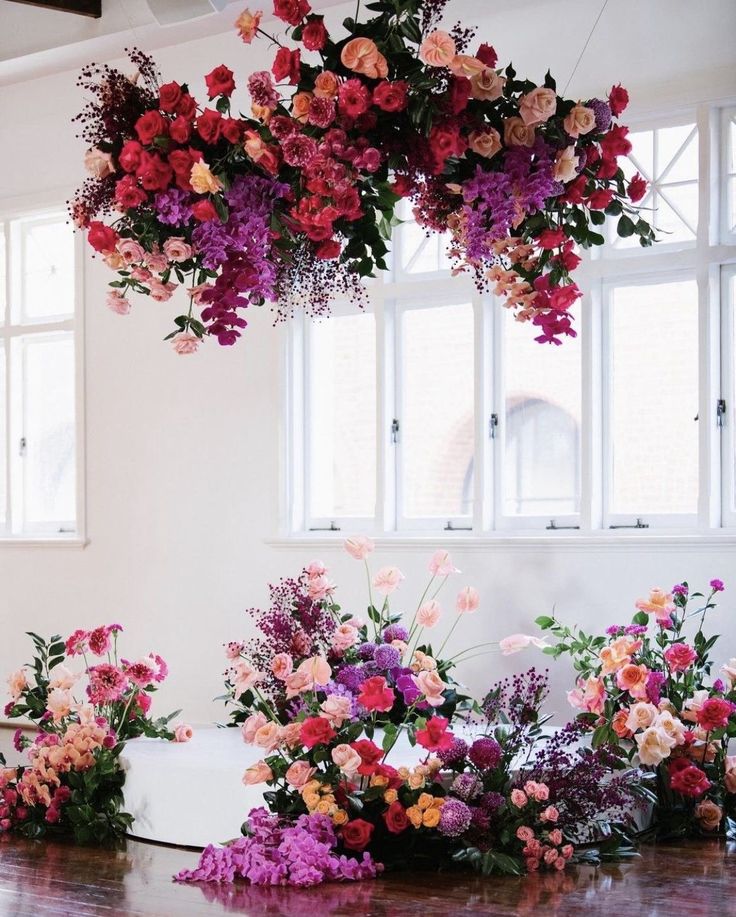
4. Statement Floral Installations and Arches
Couples are spending less of their wedding flower budget on bouquets and more of it on installations that transform the venue itself. The shift reflects how couples actually use their venues for ceremonies, first looks, vows, and social media moments.
Floral Arches Have Become the Ceremony Centerpiece
Arches now anchor most ceremony setups as the visual focal point. The style ranges from full lush coverage to asymmetrical partial arches with negative space, depending on the venue and the couple’s aesthetic. Garden roses, dahlias, delphinium, and trailing greenery are the most-requested elements in modern arch builds.
Hanging Installations and Ceiling Pieces Are Gaining Ground
Hanging florals over reception tables and dance floors has shifted from rare custom requests to standard wedding flower store offerings. The pieces use lightweight blooms like hydrangea, dried palms, pampas grass, and eucalyptus to keep weight manageable while delivering visual impact from above.
Oversized Aisle Arrangements Replace Pew Decorations
Couples are also replacing small pew or chair markers with large urns or pedestals positioned along the aisle. Each one carries a single dramatic arrangement rather than a scattered set of small bouquets, which delivers more visual return for the budget spent.
5. Locally Sourced and Seasonally Available Blooms
Local sourcing has become a major selling point for couples who care about sustainability, freshness, and supporting nearby flower farms.
The Cost and Freshness Difference
Imported wedding flowers travel three to five days in cold storage before reaching the florist. Local blooms can arrive within twenty-four to forty-eight hours of being cut, which is why they last noticeably longer in the bouquet and on the tables.
How a Locally Sourced Wedding Flower Plan Comes Together
- Selecting a wedding date and matching it to the regional bloom calendar
- Building the palette around what is actually growing locally that month
- Avoiding imported staples in favor of fresh regional alternatives
- Working with the florist to substitute equivalent local blooms when needed
- Adjusting expectations away from year-round availability of specific flowers
Seasonal California Wedding Flowers Worth Considering
- Garden roses available across most of the year in multiple colors
- Ranunculus for late winter and spring weddings in soft tones
- Dahlias for late summer and fall weddings in bold and rich colors
- Sweet peas for spring weddings, carrying a delicate, trailing fragrance
- Stock for any season, offering fragrance and lasting vase life
6. Personalized Designer Bouquets Over Catalog Picks
The fastest-growing wedding flower trend is personalization itself. Couples increasingly skip the standard catalog options and ask their wedding flower store to design something specifically around their color story, venue, and personalities.
The Consultation Process Matters Most
A skilled florist asks detailed questions before any design work begins. The answers shape every flower choice, color combination, and arrangement size across the entire wedding.
What Most Florists Will Ask About in a Consultation
- The exact wedding palette, including dress, suit, and bridesmaid colors
- The venue’s natural light, ceiling height, and architectural details
- Any sentimental flowers the couple wants included for personal reasons
- The bridal party’s outfits and how the bouquets need to coordinate
- Photography style influences whether arrangements should be photographed softly or boldly
Many wedding flower stores label these custom builds as a designer’s choice option. It gives couples a starting point for freestyle floral work without locking them into a specific palette or flower list upfront.
Where to Find These Wedding Flower Trends Near You
Finding a wedding flower store that can execute these trends well takes more research than couples often expect. Most florists handle birthdays and sympathy work daily, but wedding florals are a specialty that not every shop is set up to deliver on at scale.
Key things to look for when shopping for a local wedding flower store:
- A dedicated wedding portfolio with real photos from past events
- Consultation appointments available before any deposit is required
- Experience with the specific style or palette being requested
- Local sourcing relationships with regional flower farms
- Installation capabilities for arches, ceiling pieces, or large centerpieces
- Flexible custom design options beyond the standard catalog
- Clear pricing structure for bouquets, ceremony pieces, and reception florals
FAQs
How far in advance should couples book a wedding flower store?
Most experienced wedding florists recommend booking six to nine months ahead, especially for peak season dates between May and October. Popular wedding flower stores in major markets often book up a full year in advance.
What is the typical wedding flower budget in 2026?
Wedding flower budgets vary widely by region and scale, but most full-service weddings spend between $2,500 and $10,000 on florals. Installation-heavy weddings with arches and large centerpieces can run significantly higher.
Can a wedding flower store match a Pinterest inspiration photo exactly?
Close matches are possible if the flowers in the photo are in season locally. Exact replicas often require imported flowers, which adds cost and reduces freshness. A skilled florist can usually achieve the same overall look using seasonal alternatives.
Final Thoughts
Wedding flower trends in 2026 have moved well past the tight white-rose formula that defined weddings for decades. Soft blush palettes still dominate, but moody jewel tones, garden-style loose bouquets, statement installations, locally sourced flowers, and personalized designer arrangements are all reshaping what couples actually want from a wedding flower store. The best part is that these trends are not mutually exclusive, and most weddings mix elements from several of them into something unique to the couple.
Finding a wedding flower store actually capable of executing these trends is harder than the planning guides admit. Growing Wild has been operating out of 1201 Highland Avenue in Manhattan Beach for over 30 years. Their work covers everything from intimate ceremonies to large coastal receptions. The wedding collection mixes signature pieces with fully customized designs built around each couple’s color story. Couples looking for a local wedding flower store can start the conversation at the shop or by booking a consultation directly.
